Select your language


- Details
-
 By Vincenzo Caserta
 - Category: BSFN NER Development
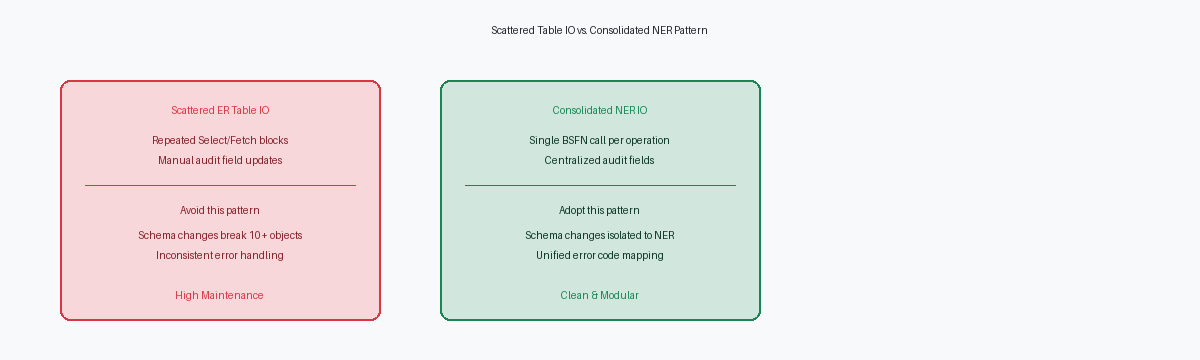
In a typical enterprise JDE footprintThe total installation and configuration of JD Edwards software within an organization., a single custom table like F55101 often has its Select, Fetch, Insert, and Update logic duplicated across 15 to 20 different APPLsInteractive screens or applications that users work with in JD Edwards. and UBEsUniversal Batch Engine; these are background reports or automated processes in JD Edwards.. This copy-paste approach to Event Rules (ER)The proprietary scripting language used to create logic within JD Edwards applications. creates a massive maintenance burden; a simple database schemaThe organized structure of a database, defining how data is stored and related. modification—such as adding a 10-character category code field—forces developers to manually refactor and test dozens of individual objects. Adopting a unified JDE NERNamed Event Rule; a reusable block of business logic that can be called by multiple programs. table IOInput and Output operations performed on database tables, such as reading or writing data. pattern to avoid repeated ER blocks consolidates these database operations into a single, action-driven Named Event Rule.
- Details
- By Vincenzo Caserta
- Category: BSFN NER Development
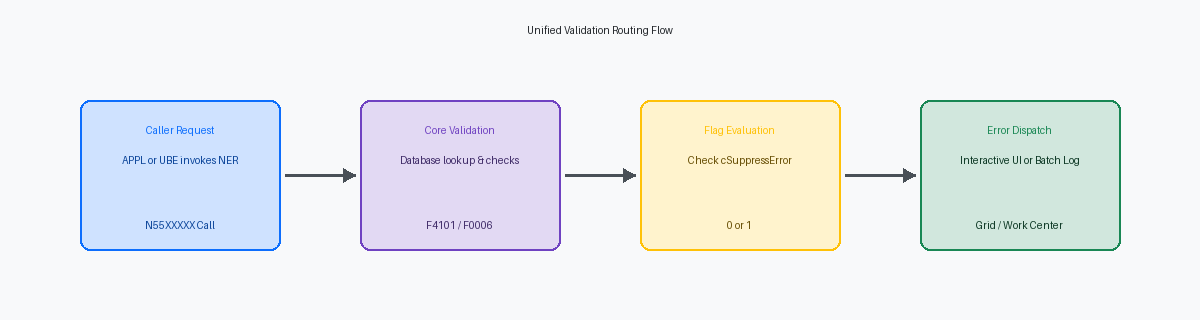
In mature JD Edwards 9.2A version of Oracle's Enterprise Resource Planning (ERP) software used for managing business operations. environments, I routinely find the exact same validation logic duplicated across a dozen or more different entry points, from custom P42101A specific JD Edwards interactive application used for entering and managing sales orders. power forms to automated EDIElectronic Data Interchange; a standardized method for transferring business documents between different computer systems. inbound UBEsUniversal Business Engines; JD Edwards batch processes used for reports and background data processing.. This fragmentation occurs because developers default to placing validation directly within the Control Exited/Changed event rulesThe proprietary scripting language used within JD Edwards to define business logic and automation. of an interactive application (APPLAn interactive application in JD Edwards that provides a user interface for data entry and retrieval.), rendering it inaccessible to batch processes. To eliminate this technical debt, you must decouple validation execution from both the user interface and batch runtimes by implementing a JDE NERNamed Event Rule; a reusable business function created using JD Edwards event rules instead of C code. reusable validation pattern for APPL and UBE callers.
- Details
- By Vincenzo Caserta
- Category: BSFN NER Development
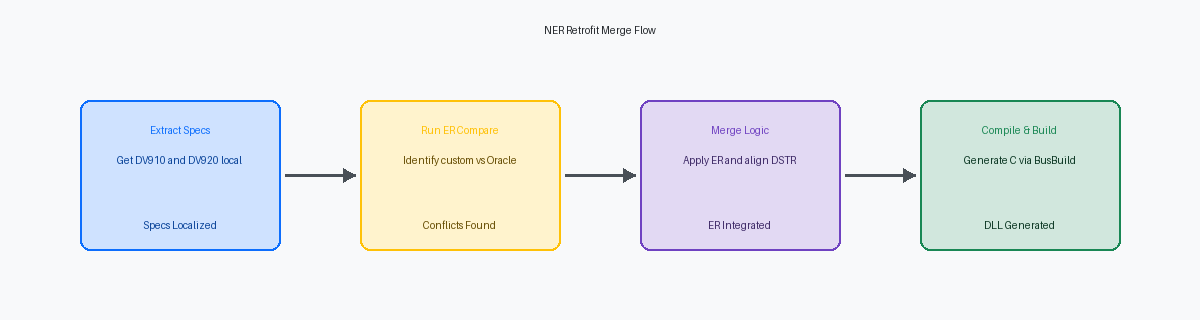
When upgrading to JD Edwards EnterpriseOne 9.2, developers routinely watch automated merge tools fail on heavy-duty Named Event Rules (NERs)A JD Edwards tool that allows developers to create business logic using a visual interface, which is then converted into C programming code. like standard Sales Order Master Business Function N4200310 or Item Master N4101060. A standard Electronic Software Update (ESU)A package of fixes or new features released by Oracle for JD Edwards software. can overwrite thousands of lines of custom ER code if you trust the default merge. This guide provides a step-by-step JDE NER retrofit example to merge custom event rules with Oracle changes, demonstrating how to manually dissect these high-risk conflicts within the JD Edwards ER Compare toolA utility used to identify and merge differences between two versions of Event Rules code..
- Details
- By Vincenzo Caserta
- Category: BSFN NER Development
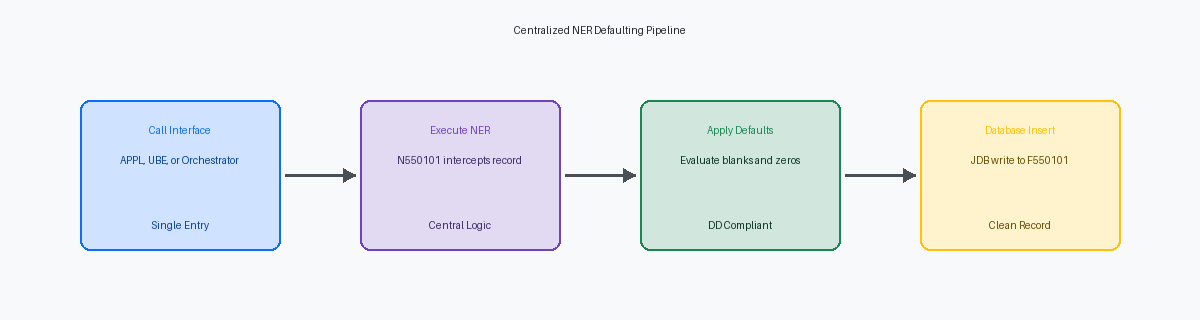
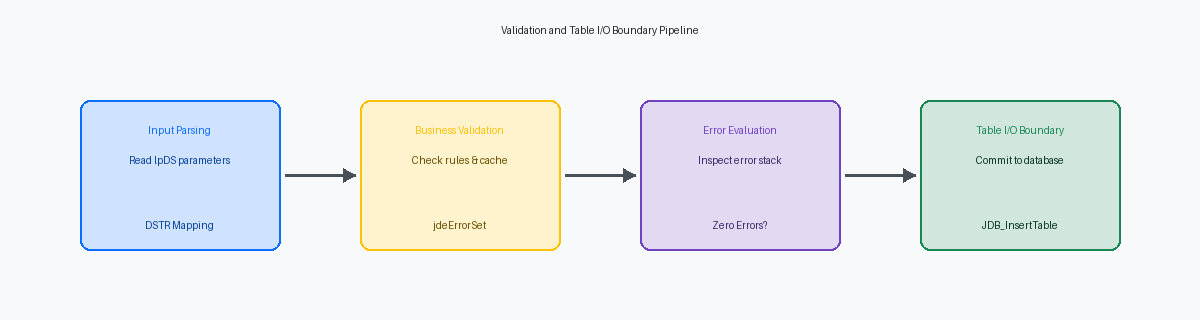
When auditing custom modifications across JDE 9.2JD Edwards EnterpriseOne version 9.2, a comprehensive suite of Enterprise Resource Planning (ERP) software. environments, I routinely find a common architectural flaw: default column values for custom tables (such as a custom F550101) hardcoded across multiple interactive applications (APPLAn interactive application in JD Edwards that users interact with via a web browser.). Relying on database-level default constraints fails because the JDB middlewareThe database abstraction layer that handles communication between JD Edwards applications and the physical database. layer explicitly inserts blanks or zeros, overriding database-level defaults. Implementing JDE NERNamed Event Rule, a type of business function created using JD Edwards scripting instead of C code. examples for custom table default values allows teams to centralize validation and assignment before calling the table I/OOperations that read from or write to database tables within JD Edwards. insert, ensuring data integrity across all entry points.
- Details
- By Vincenzo Caserta
- Category: BSFN NER Development
Hardcoding custom validation logic directly into the Form Event Rules of P4210The standard JD Edwards interactive application used by staff to enter and manage sales orders. or P42101 is a technical debt trap that guarantees data integrity issues the moment you introduce EDI (R47011)Electronic Data Interchange; R47011 is the standard JD Edwards batch program used to import sales orders from external systems. or BSSVBusiness Services; a JD Edwards architecture used to facilitate web service integrations using Java.-based integrations. When order entry bypasses the interactive forms, your validation rules are missed entirely. This JDE NERNamed Event Rule; a JD Edwards tool that allows developers to write business logic in a proprietary language which is then converted to C code. event rules example to validate sales order line data demonstrates how to encapsulate this logic in a reusable business function rather than scattering it across multiple application events.
More Articles …
Page 1 of 6