Select your language


- Details
-
 By Vincenzo Caserta
 - Category: APPL Development
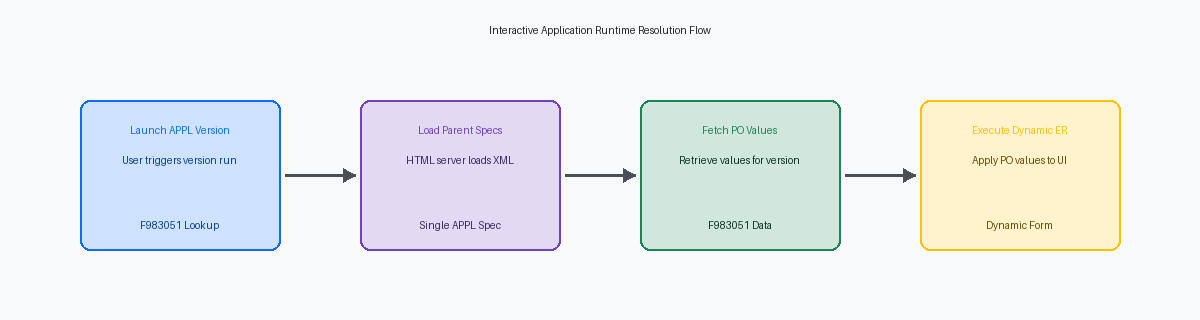
In over two decades of rescuing custom JDEJD Edwards, a comprehensive Enterprise Resource Planning (ERP) software suite. codebases, the most persistent architectural failure I see is treating Interactive Application (APPL)A JD Edwards program with a user interface for viewing or entering data. versions like Batch Application (UBE)A JD Edwards background process used for reports or bulk data processing. versions. While a UBE version contains independent data selection and sequencing specs, an APPL version is simply a pointer to Processing OptionUser-defined parameters that control how a program behaves without changing its code. values stored in the F983051The central database table in JD Edwards that stores version definitions and parameters. table. Misunderstanding this distinction leads to developers hardcoding version names inside Event RulesThe proprietary scripting language used to program logic within JD Edwards objects., which forks the codebase and inflates your upgrade footprint.
- Details
- By Vincenzo Caserta
- Category: APPL Development
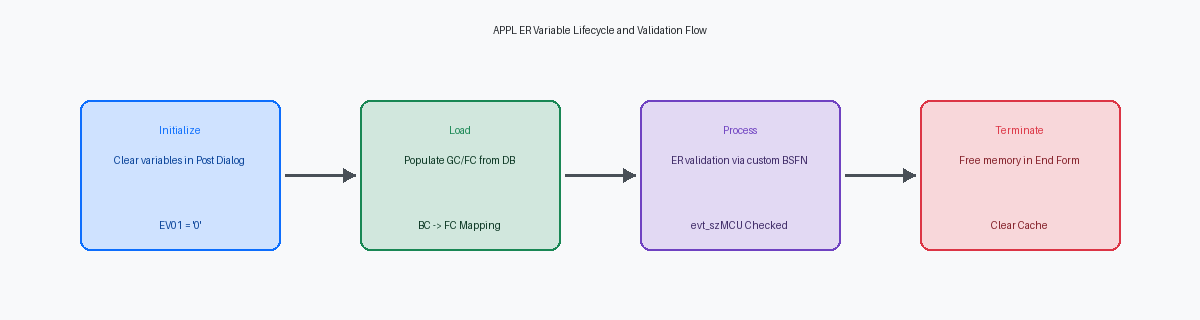
When running an ER CompareA JD Edwards tool used to identify and merge differences in logic between two versions of an object. on a heavily modified P4210The standard JD Edwards application used for Sales Order Entry. or P4310The standard JD Edwards application used for Purchase Order Entry. during a 9.1 to 9.2 upgrade, the cost of poor development habits becomes immediately clear. Cryptic variables like evt_szName_WD01 or undocumented Event Rules (ER)The proprietary scripting language used to define business logic within JD Edwards applications. turn a standard multi-hour retrofit into a multi-day debugging cycle. The visual merge tool fails to align logic when custom variables lack structural context, leading to silent runtime memory corruption or broken form interconnectsThe mechanism used to pass data and parameters between different forms in a JD Edwards application..
- Details
- By Vincenzo Caserta
- Category: APPL Development
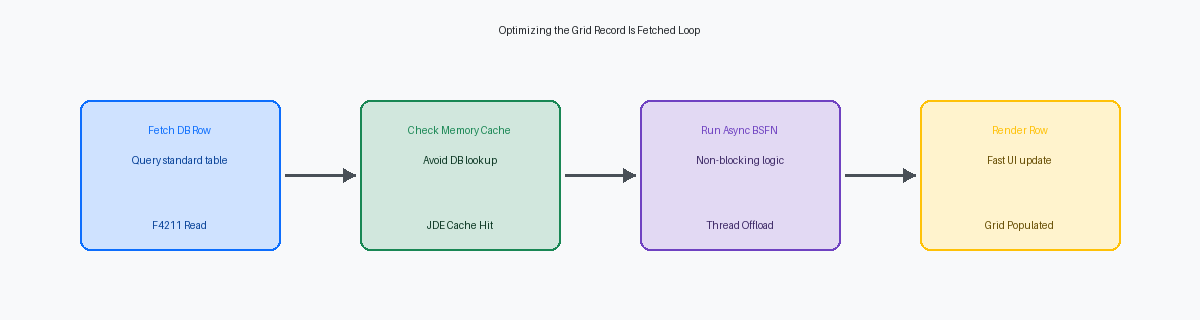
When a custom grid in an application like P554210A custom JD Edwards application, typically a modified version of the standard Sales Order Entry program. takes over ten seconds to load 500 records, basis teamsTechnical administrators responsible for the underlying infrastructure, installation, and maintenance of the enterprise software environment. immediately blame database indexes or WebLogicAn Oracle application server that hosts the JD Edwards web interface and manages Java-based services. JVM heap sizesThe memory allocated to the Java Virtual Machine for running applications; if too small, it can cause system crashes.. In the vast majority of performance audits conducted on EnterpriseOne 9.2, the infrastructure is perfectly fine; the bottleneck is synchronous Event Rules (ER)The JD Edwards programming language used to create logic within applications and reports without writing traditional code. running on the JAS serverJava Application Server; the component that translates JD Edwards logic into a web format for browsers. for every single row. Achieving sub-second response times requires moving away from infrastructure finger-pointing and focusing on JD Edwards APPL grid performance tuning for large datasets within the JDE runtime engine itself.
- Details
- By Vincenzo Caserta
- Category: APPL Development
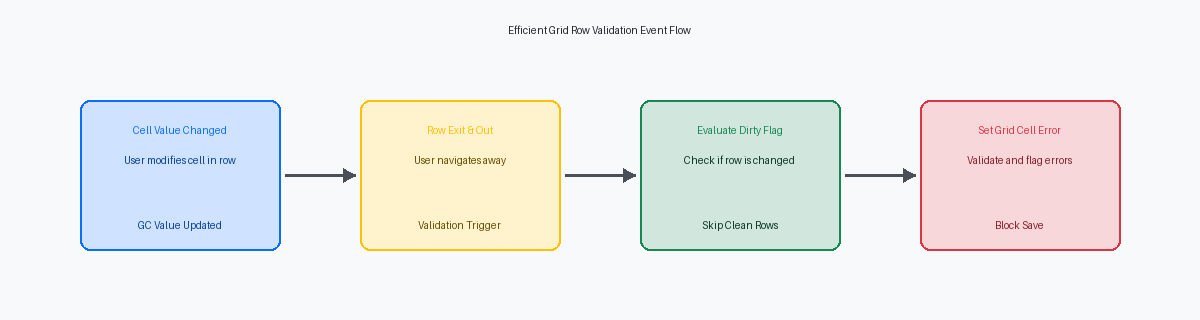
In a standard P4210The standard JD Edwards application used for entering and managing sales orders. sales order customization with dozens of grid rows, a naive "Get Max Grid RowsA system function that counts the total number of rows currently loaded in a data grid." loop during validation can easily add nearly a second of UI latency per transaction. Developers often assume the EnterpriseOneOracle's JD Edwards ERP software suite designed for managing complex business processes. runtime optimizes these loops under the hood, but it actually evaluates every cell sequentially, dragging down interactive performance on HTML serversWeb servers that render the JD Edwards interface and deliver it to the user's browser.. This JD Edwards APPLShort for Application, referring to a specific interactive program within the JD Edwards environment. development example grid row validation walkthrough shows how to target only modified rows, cutting validation overhead by more than 80%.
- Details
- By Vincenzo Caserta
- Category: APPL Development
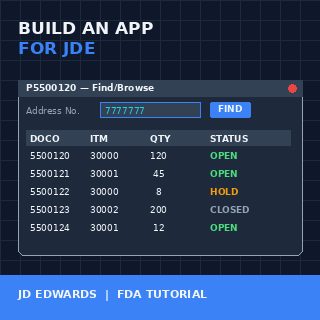
An example of creating an application for JD Edwards is the request I get most often from developers moving into the JDE ecosystem from other ERPs or from general software development. The JDE answer to "build a CRUD screen" is not what they expect, because the path is not "open the IDE and start coding". The path is a specific sequence through Object Management Workbench, Form Design Aid, business view binding, and event rule attachment, and skipping any step produces a form that technically compiles but does not behave like a real JDE application. The exercise below walks through that sequence end to end, building a custom inquiry application against a custom F55 table — the simplest realistic case, the one every developer needs to do cleanly before moving to anything more complex.
The scenario is concrete: the business has a custom table F5500120 holding service request records, and they need an internal application to list them, filter by status and customer, and drill into the detail view for a single record. The standard JDE pattern for this is a Find/Browse form pointing to a Fix/Inspect form, both bound to a custom business view, with event rules connecting them and a couple of BSFN calls for derived data.
- Details
- By Vincenzo Caserta
- Category: BSFN NER Development
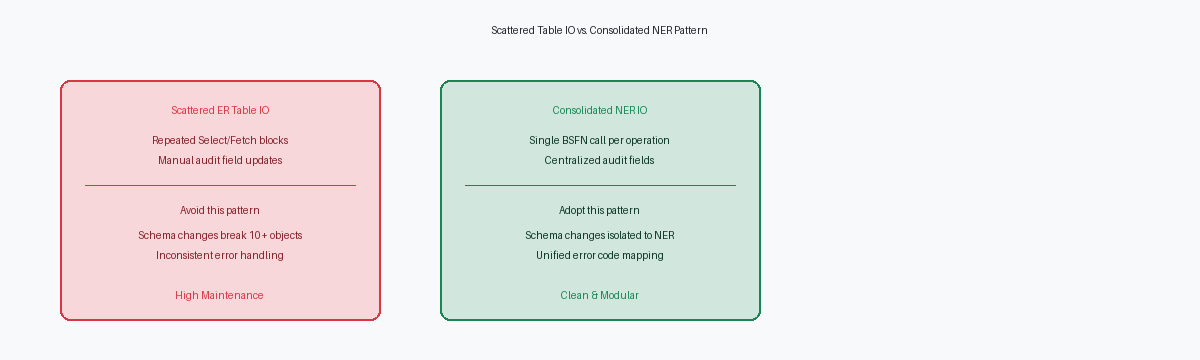
In a typical enterprise JDE footprintThe total installation and configuration of JD Edwards software within an organization., a single custom table like F55101 often has its Select, Fetch, Insert, and Update logic duplicated across 15 to 20 different APPLsInteractive screens or applications that users work with in JD Edwards. and UBEsUniversal Batch Engine; these are background reports or automated processes in JD Edwards.. This copy-paste approach to Event Rules (ER)The proprietary scripting language used to create logic within JD Edwards applications. creates a massive maintenance burden; a simple database schemaThe organized structure of a database, defining how data is stored and related. modification—such as adding a 10-character category code field—forces developers to manually refactor and test dozens of individual objects. Adopting a unified JDE NERNamed Event Rule; a reusable block of business logic that can be called by multiple programs. table IOInput and Output operations performed on database tables, such as reading or writing data. pattern to avoid repeated ER blocks consolidates these database operations into a single, action-driven Named Event Rule.
- Details
- By Vincenzo Caserta
- Category: BSFN NER Development
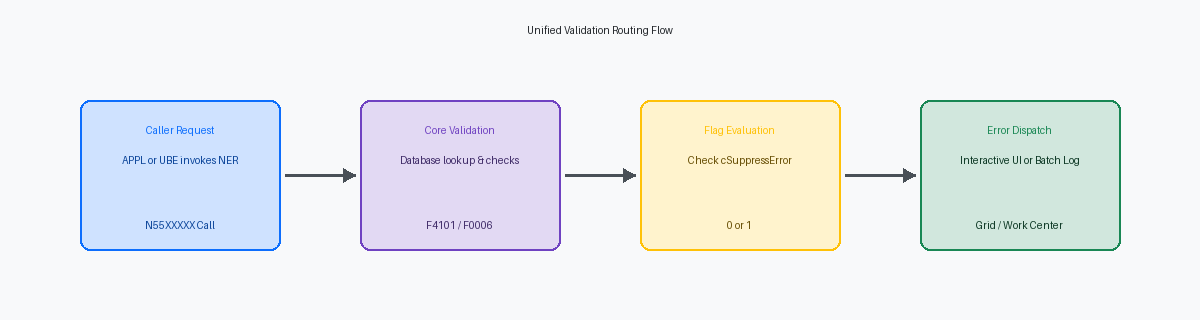
In mature JD Edwards 9.2A version of Oracle's Enterprise Resource Planning (ERP) software used for managing business operations. environments, I routinely find the exact same validation logic duplicated across a dozen or more different entry points, from custom P42101A specific JD Edwards interactive application used for entering and managing sales orders. power forms to automated EDIElectronic Data Interchange; a standardized method for transferring business documents between different computer systems. inbound UBEsUniversal Business Engines; JD Edwards batch processes used for reports and background data processing.. This fragmentation occurs because developers default to placing validation directly within the Control Exited/Changed event rulesThe proprietary scripting language used within JD Edwards to define business logic and automation. of an interactive application (APPLAn interactive application in JD Edwards that provides a user interface for data entry and retrieval.), rendering it inaccessible to batch processes. To eliminate this technical debt, you must decouple validation execution from both the user interface and batch runtimes by implementing a JDE NERNamed Event Rule; a reusable business function created using JD Edwards event rules instead of C code. reusable validation pattern for APPL and UBE callers.
More Articles …
- JDE NER Retrofit: How to Merge Custom Event Rules with Oracle Changes
- JDE NER Examples for Custom Table Default Values
- JDE NER Event Rules Example: Validate Sales Order Line
- JDE NER Development: Designing Reusable Event Rules for Business Logic
- JDE NER Debugging: Tracing Event Rules from Application Calls
Page 5 of 16