Select your language


My Blog

- Details
-
 By Vincenzo Caserta
 - Category: My Blog
The Chaos of Microseconds
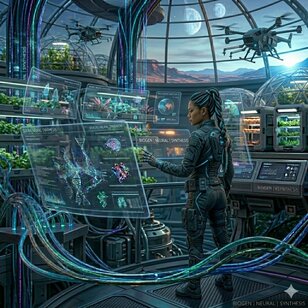
Imagine a dense cloud cover unexpectedly shifting over a city district, while hundreds of electric vehicles simultaneously begin their fast-charging cycles. At that moment, local photovoltaic energy generation collapses, while the load curve shoots steeply upward. A human operator in a control centre would have no chance of reacting to these fluctuations within milliseconds. In the past, such cascade effects led to local blackouts or required massive, expensive buffer capacities that often went unused. The problem is not a lack of energy, but the inability of classical, centralised systems to coordinate the exploding complexity of millions of decentralised endpoints.
- Details
- By Vincenzo Caserta
- Category: My Blog
Defining Autonomy: Beyond the Concept of Automation
Over 82% of next-generation logistics infrastructure in the European Union is currently managed by autonomous agents capable of logical self-repair and predictive optimisation. This figure does not merely represent an engineering milestone, but marks the definitive boundary between what we define as "automated" and what is truly "autonomous." While automation is limited to executing predetermined sequences of instructions in controlled environments, the autonomous systems of 2026 possess the ability to perceive, reason and act in dynamic, unstructured contexts.

- Details
- By Vincenzo Caserta
- Category: My Blog
Defining Autonomy: Beyond the Concept of Automation
Over 82% of next-generation logistics infrastructure in the European Union is currently managed by autonomous agents capable of logical self-repair and predictive optimisation. This figure does not merely represent an engineering milestone; it marks the definitive boundary between what we define as "automated" and what is truly "autonomous." While automation is limited to executing predetermined sequences of instructions in controlled environments, the autonomous systems of 2026 possess the ability to perceive, reason and act in dynamic, unstructured contexts.
- Details
- By Vincenzo Caserta
- Category: My Blog
The Moment When Thoughts Become Code
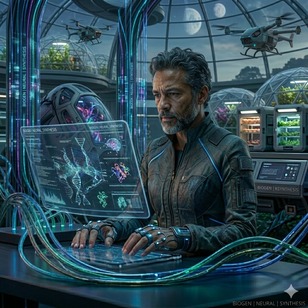
Elena closes her eyes, focuses on the virtual cursor on her holographic display and moves complex 3D structures through intention alone. What just a few years ago sounded like pure science fiction has become reality in 2026, through highly efficient neuro-interfaces and neuromorphic processors, in the most specialised engineering offices. This fusion of biological impulses and digital processing marks the turning point of an era in which the prefix "Neuro-" no longer merely describes biology, but forms the foundation of our most advanced technological infrastructure.
More Articles …
Page 8 of 18